

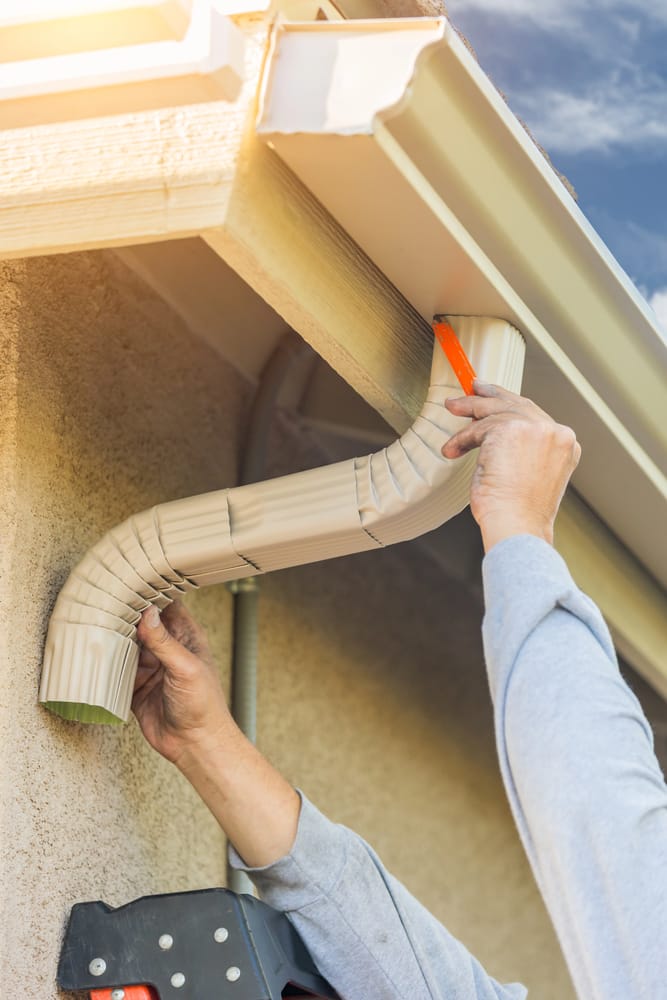
As a crucial component of your gutter system, downspouts must be positioned correctly to work effectively. Determining the right number and ideal placement can be challenging. But a common guideline is to install one downspout for every 30–40 feet of gutter.
However, this guideline is not absolute, and certain situations may require adjustments based on roof size, slope, and local rainfall conditions.
Factors That Influence Downspout Placement
A steep roof
The greater the slope of your roof, the more quickly water will run off it during a rainstorm. As the pitch increases, gravity pulls the water downward at a faster rate. This causes it to reach the edges of the roof and enter the gutters in a shorter period of time. This means your gutters must handle a higher volume of water all at once. Compare this with roofs that have a gentle slope, where the water flows more slowly and steadily.
Because of this, it is important to see how well your gutters manage heavy rainfall. The next time there is a rainstorm, take a moment to watch how water moves through your gutter system. Look for signs such as water spilling over the sides, pooling near the foundation, or streams of water bypassing the downspouts altogether. These can indicate that your existing setup is struggling to keep up with the flow.
If it seems like your gutters are having a hard time handling the amount of water coming off the roof, consider installing an additional downspout or enlarging the existing drainage capacity. Adding another downspout can help distribute the water more evenly. This will reduce the strain on any single section of gutter. And it lowers the risk of overflow, leaks, and potential water damage to your home’s exterior and foundation.
Increased roof surface
Bigger houses mean bigger roofs and a much larger surface area for rainwater to collect and drain off. As the roof size increases, so does the volume of water that can accumulate during a storm, especially in heavy or prolonged rainfall. This additional water places more demand on the entire drainage system, from the roof to the gutters and down through the downspouts.
With greater amounts of water running down the roof and into the gutters, both the number and placement of downspouts become more critical. If there are too few downspouts, or if they are positioned poorly, the gutters may not be able to carry water away quickly enough. This can cause water to back up, spill over the edges, and potentially damage siding, landscaping, or the foundation. To prevent gutters from overflowing and to ensure efficient drainage, downspouts must be carefully sized, spaced, and located based on the roof’s dimensions, slope, and the typical rainfall in the area.
Gutter size
The size and capacity of your gutters play a major role in determining how many downspouts your home needs to drain water effectively. Larger gutters that can carry a higher volume of water are often able to function well with fewer downspouts because each downspout can handle more runoff before becoming overwhelmed. In contrast, smaller gutters have a limited capacity and tend to fill up quickly during heavy rain. So they generally require more downspouts to prevent overflow, pooling, and potential water damage to your siding, foundation, or landscaping.
If you suspect that your home could benefit from additional drainage but you prefer not to add entirely new downspout locations, there may be an alternative solution. In many cases, you can upgrade your existing downspouts by replacing them with versions that have a larger diameter. A wider downspout allows water to flow out of the gutters more quickly and efficiently. This can help to reduce backups and overflow, especially during intense storms.
However, before making this change, it is important to carefully measure your current gutters and confirm that they are large enough to support bigger downspouts. If the gutters are too narrow, an oversized downspout may not fit properly or may require modifications to the gutter system. Ensuring compatibility between your gutters and the new downspouts will help maintain proper drainage, prevent leaks, and keep your overall system functioning smoothly.
If you’re having issues with overflowing gutters or aren’t sure if your gutter system is adequate for your needs, give Muth & Company Roofing a call at (614) 882-0900. We will help you determine the proper number and placement of downspouts for your system. And we’re happy to advise you on any other roofing concerns you may have as well.
Frequently Asked Questions About Downspouts
How many downspouts does a house need?
As a general guideline, a home should have one downspout for every 30–40 feet of gutter. However, the exact number of downspouts your home needs depends on several factors, including the size and slope of your roof, the size of your gutters, and the typical rainfall levels in your area. Steeper roofs, larger homes, and smaller gutters all increase the demand on your drainage system and may require additional downspouts to prevent overflow and water damage.
Where should downspouts be placed on a home?
Downspouts should be spaced evenly along your gutter system. This is typically every 30–40 feet, and positioned at low points or corners where water naturally collects. Proper downspout placement also depends on your roof’s slope and surface area. Steeper or larger roofs produce a higher volume of runoff. This may require additional downspouts or adjusted spacing. This will ensure water is efficiently carried away from your home’s foundation, siding, and landscaping.
What are the signs that my home needs more downspouts?
The most common signs that your home needs more downspouts include water spilling over the sides of your gutters during rainfall. Also, water pooling near your foundation, and streams of water bypassing the downspouts altogether. These issues suggest your current drainage system cannot keep up with the volume of runoff. If adding new downspouts is not ideal, upgrading to larger-diameter downspouts can also improve drainage capacity. Provided your existing gutters are wide enough to accommodate them.